Monday, 16 March 2026

Planting project reaches its 250,000 tree target

A pioneering community tree project has surpassed its target of planting a quarter of a million trees in Devon.

Saving Devon’s Treescapes was established in 2021 with the aim of restoring huge losses of tree cover caused by the devastating plant disease known as ash dieback. It targeted the replacement of trees outside of woodlands – including hedges, individual trees and orchards. It’s estimated that Devon will lose more than 80% of the many thousands of ash trees, some more than 100 years old.

Saving Devon’s Treescapes was led by the charity Devon Wildlife Trust on behalf of the Devon Ash Dieback Resilience Forum and was supported by the National Lottery Heritage Fund, One Tree Planted, the Woodland Trust and other partners including Devon County Council, East Devon Council and FWAG South West.

Farmland, parks, gardens, school grounds and community spaces have all benefited from the free trees distributed by the project. All the young trees were native kinds including oaks, hazels, spindle and hornbeam among many other species. Many of the saplings were grown from wild seeds collected in Devon and grown in the project’s two volunteer run tree nurseries – one at Broadclyst in east Devon and the other at Meeth Quarry nature reserve in north Devon.

Saving Devon’s Treescapes Project formally closes at the end of March after the completion of its funding, but it leaves behind a legacy in the shape of more than 250,000 young trees which will grow to benefit people and wildlife for decades to come.

Devon Wildlife Trust’s Michael Rogers has managed the Saving Devon’s Treescapes Project during its last 18 months. Michael said:

“I have worked on landscape-scale conservation projects for nearly two decades, from coastal grasslands on the north coast of Scotland to the dunes of the Carmarthenshire coast in south Wales – however it’s Saving Devon’s Treescapes that has had the biggest impact on me personally and has probably had the most impact on biodiversity too!  

This project has been an incredible success, nurturing and planting more than 250,000 trees, but the real impact will be in several years when those communities and landowners who have been inspired by us to plant or grow their own trees continue the work we started here. That is why this project will have a lasting influence – one that is invaluable in our constant efforts to preserve Devon’s habitats and the species that depend on them for future generations.”

Saving Devon’s Treescapes has touched the lives of hundreds of people having worked with volunteers and communities in every corner of the county.

Alongside tree planting, the project coordinated citizen science projects including an annual Devon Bat Survey and training more than 250 people to record lichens across the countryside. These projects have proved vital in providing important data about key wildlife which have been impacted by the loss of ash trees.

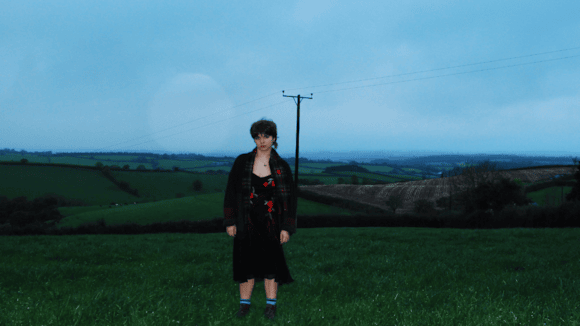
The project has also been able to show off its creative side. It staged public art workshops and commissioned photographer Robert Darch to create a unique photographic record of the landscapes affected by ash dieback and their regeneration through the project (see attached image).

Florence has been volunteering with Saving Devon’s Treescapes for the more than two years. Florence described the impact of the project on her:

“Before volunteering at Saving Devon’s Treescapes’ Broadclyst tree nursery, I had little experience in the nature sector and had never planted a tree in my life. Now I intend to make it my career!

At the nursery, I’ve seen trees go from seed to sapling and have helped them throughout. The nursery has provided the opportunity for me to learn new skills, both from other volunteers and DWT staff. I’ve met like-minded people, spent time outdoors, and cemented my career ambitions: namely, to work at a tree nursery in aid of replenishing our natural world with native tree species. I have found that I truly enjoy every part of the process. Now I’m excited to continue sowing, processing, and planting to aid nature’s recovery!”

Although the Saving Devon’s Treescapes Project is now closing people can find out more about its work and that of Devon Wildlife Trust at www.devonwildlifetrust.org/saving-devons-treescapes

Florence – a volunteer at Saving Devon’s Treescapes Broadclyst tree nursery. Photo copyright Robert Darch (All Rights Reserved)

Florence, a volunteer at Saving Devon’s Treescapes Broadclyst tree nursery. Photo copyright Robert Darch (All Rights Reserved)

Felling diseased ash trees at Devon Wildlife Trust’s Marsland nature reserve, north Devon. Photo copyright Robert Darch (All Rights Reserved)

 Felling diseased ash trees at Devon Wildlife Trust’s Marsland nature reserve, north Devon. Photo copyright Robert Darch (All Rights Reserved)

Friday, 13 March 2026

Heanton Nursing Home: A Career in North Devon That Became a Place of Belonging

Sometimes the most important part of care is not what you say, but how well you can see the world through another person’s eyes. At Heanton Nursing Home in North Devon, that understanding shapes everyday life. For Pamela “Pam” Manning, working in dementia and complex care has taught her that distress often comes from fear, loss or confusion that feels completely real to the person experiencing it. Responding to that emotional reality, rather than correcting it, can be the gentlest form of care.

Pam did not begin her working life in social care. After many years working as a funeral arranger, she and her husband moved to North Devon, a place they had long loved from holidays in Croyde. “Retirement was meant to be the dream, but after a while we both realised, we needed a reason to get up, get out and meet people again,” she says.

Hearing about a nearby dementia care home, she applied for a part-time role despite having no previous experience. “I remember thinking, I’ve never done care before, how hard could it be?” she said with a smile. “I soon learned that care is one of the most skilled and meaningful roles you can do.”

Her motivation was deeply personal. Having seen how dementia had affected someone close to her, she carried with her determination. “My lovely uncle Bill had been in a Dementia Home the very year we moved and had sadly passed away, my cousin sent me photos of him, and he didn't look like Uncle, he was unshaven and unkempt with a blank expression. It broke my heart. He had been a proud smart man. After his funeral I vowed that somehow, I was going to make a difference and learn about Dementia in memory of my uncle. Hello Heanton.”

Pam remembers her first day as though it were yesterday. Among the first people she spent time with was Lillian, a resident whose anxiety and restlessness often led her to walk the hallways for long periods during the day. “We must have walked those hallways 15 or 20 times,” she recalls. “I remember thinking she must be as bored as I was, but there was something about Lily that kept me curious. That’s what made me come back.”

Then one moment changed everything. Lillian suddenly stopped and pointed towards the floor, admiring something Pam could not see. “Flowers,” she said, “beautiful blue flowers.” Instead of correcting her, Pam bent down, pretended to pick them up, and suggested they take them home to place in a vase before baking a cake for the children returning from school.

“The smile on her face and the warm twinkle in her sea-blue eyes melted my heart quicker than ice cream on a hot beach,” Pam recalls. “Then Lily reached out, grabbed my hand and said softly, ‘Come on, let’s go home.’ That was the moment I understood the word connection.”

That experience shaped the way Pam approaches dementia care. “I realised it was because I didn’t say, ‘There’s nothing there, Lily.’ I stepped into her reality. I lived those hours in her world, in her time, on her terms,” she explains. “That’s when everything changed between us. She trusted me. Over time, she became more relaxed, more confident and happier in herself. I would go home thinking about it, being in her reality was helping her feel calmer.””

It was through experiences like this that Pam began to understand what is often described in dementia care as the careful use of therapeutic lies.

The phrase can sound stark. But in practice, it is not about deception. It is about responding to the emotional reality someone is living in. Validation means acknowledging the feeling without correcting the belief, for example, allowing someone to talk about their mum without challenging whether she is still alive. A therapeutic lie goes further. It offers reassurance that may not be factually accurate, but prevents immediate distress, such as gently saying, “She’s safe, you don’t need to worry,” when someone is panicked or grieving.

The distinction matters. In dementia and complex care, repeatedly correcting someone who cannot retain new information can cause them to experience shock or loss again and again. In those moments, strict truth-telling can unintentionally cause harm. For Pam, therapeutic reassurance is never automatic. It is considered, proportionate and rooted in knowing the person. The question is always the same: what response will reduce distress and protect dignity right now?

Now, five years on from her first day at Heanton, Pam believes the most important lesson remains simple: meaningful care is built on connection. “This is not just a job,” she says. “Heanton to me is home. They don’t need me; I simply need them.”  

Heanton Nursing Home: A Career in North Devon That Became a Place of Belonging

To read the full story : Heanton Nursing Home: A Career in North Devon That Became a Place of Belonging - Heanton Nursing Home


Monday, 9 March 2026

‘A Roof and A Sky’ photography exhibition launches at The Burton at Bideford

A new photography exhibition launches at The Burton at Bideford with work created by individuals supported by The Pickwell Foundation.


‘A Roof and A Sky’ is an exhibition of work made by five refugees, under the guidance of socially-engaged photographer Jamie Dormer-Durling. The participants have attended 10 workshops at The Burton, where they have learned various image making skills, including alternative processes such as creating lumen prints alongside learning how to use digital cameras.


The Pickwell Foundation supports both people and planet, empowering communities to welcome resettled families, supporting those seeking asylum, and championing climate action.


This project has allowed the group to share their story with images, where words are sometimes difficult when there is a language barrier. The photographs in the exhibition are a peek into their domestic lives and the new landscapes they find themselves in. The group said the project “has helped us notice small details and to grow more confident in expressing ourselves.”


The title of the exhibition, ‘A Roof and A Sky’, reflects what the group hope for in their lives. A roof to give them safety, protection and the security of a sanctuary, and the sky which represents freedom and hope – the space to grow.


Carole Evans, Learning and Engagement Manager at The Burton at Bideford said:

“It has been brilliant to watch the participants grow in confidence over the last few weeks; through photography but also in telling their story. They have created work which shares their own perspective of North Devon; a place they now call home.”


‘A Roof and A Sky’ is part of The Burton at Bideford’s social practice work which develops collaborative and participatory projects with their local community.

It was facilitated by Jamie Dormer-Durling, a socially-engaged photographer based in Weston-super-Mare. He is a founder/director of Common Waves CIC, a community arts organisation supporting underrepresented people to build creative confidence and share stories, based at The Common Room, a community art space that he co-founded. Jamie is also the creative director of Photo Weston, a photography festival bringing international artists to the region, and a board member and regular collaborator with IC Visual Lab.

The project is run in partnership with The Pickwell Foundation and funding from The Foyle Foundation.

Lumen prints by Hiba (left) and Mohammed (right)   Image Copyright ( All Rights Reserved)
Lumen prints by Hiba (left) and Mohammed (right) Image Copyright (All Rights Reserved)

👀👀👀

‘A Roof and A Sky’ runs from 5th March – 17th May at The Burton at Bideford, Kingsley Road, Bideford EX39 2QQ. Free entry. 

For more details see www.theburton.org.


Opening Hours:

Tuesday – Saturday 10am–5pm

Sunday 11am–4pm

Free entry